
Daily Shlokas with Meaningदैनिक श्लोक
Six short verses many Hindu homes say every day, each with its meaning and our video.
One before beginning any work, one to Shiva, one after the aarti, one to the Devi, one to the Guru and one to Krishna. Each verse is given in Devanagari with a transliteration, its meaning, where it comes from and when it is said.
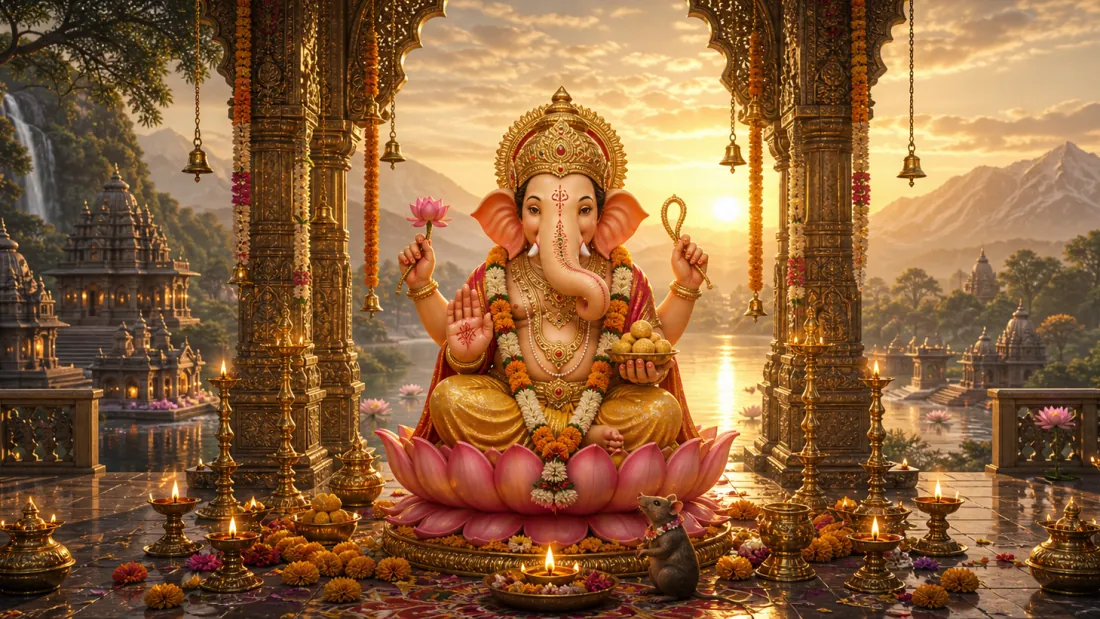
Vakratunda MahakayaGanesha
वक्रतुण्ड महाकाय सूर्यकोटि समप्रभ।
निर्विघ्नं कुरु मे देव सर्वकार्येषु सर्वदा॥
Vakratunda mahakaya suryakoti samaprabha,
nirvighnam kuru me deva sarvakaryeshu sarvada.
O Lord with the curved trunk and mighty body, radiant as ten million suns, make all my work free of obstacles, always.

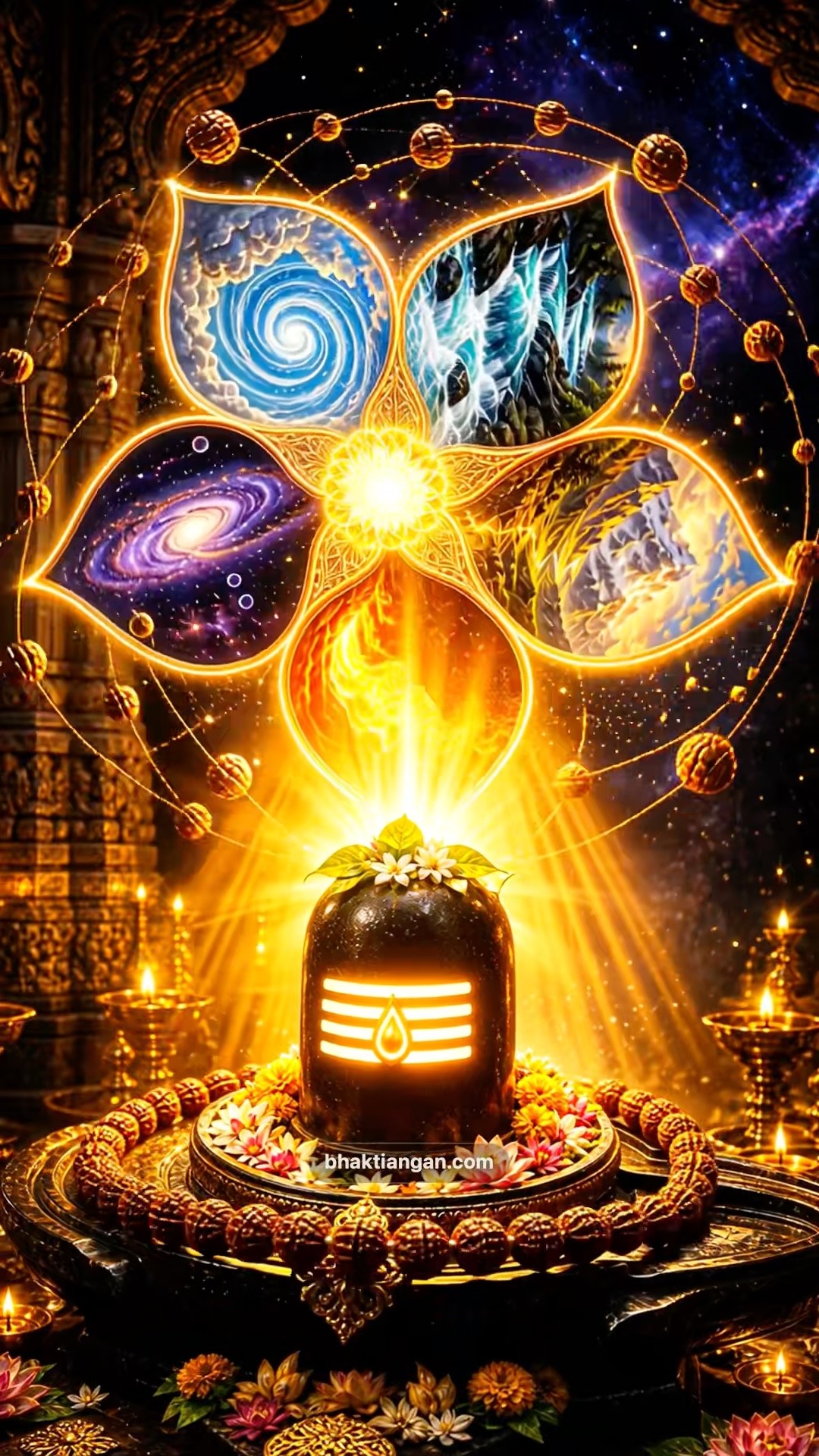
Om Namah ShivayaShiva
ॐ नमः शिवाय॥
Om namah shivaya.
Om, salutations to Shiva, the auspicious one.
Its five syllables, na, mah, shi, va and ya, are traditionally linked with the five elements: earth, water, fire, air and space.
Karpur GauramShiva and Parvati
कर्पूरगौरं करुणावतारं संसारसारं भुजगेन्द्रहारम्।
सदा वसन्तं हृदयारविन्दे भवं भवानीसहितं नमामि॥
Karpuragauram karunavataram samsarasaram bhujagendraharam,
sada vasantam hridayaravinde bhavam bhavanisahitam namami.
White as camphor, compassion embodied, the essence of the world, wearing the king of serpents as a garland, ever dwelling in the lotus of the heart: I bow to Shiva together with Bhavani.
Some texts read sada ramantam, ever delighting, in place of sada vasantam.

Sarva Mangala MangalyeDurga
सर्वमङ्गलमाङ्गल्ये शिवे सर्वार्थसाधिके।
शरण्ये त्र्यम्बके गौरि नारायणि नमोऽस्तु ते॥
Sarvamangalamangalye shive sarvarthasadhike,
sharanye tryambake gauri narayani namostu te.
O auspiciousness of all that is auspicious, O gracious one who fulfils every aim, O refuge, three-eyed Gauri, Narayani: salutations to you.

Gurur Brahmathe Guru
गुरुर्ब्रह्मा गुरुर्विष्णुः गुरुर्देवो महेश्वरः।
गुरुः साक्षात् परब्रह्म तस्मै श्री गुरवे नमः॥
Gurur brahma gurur vishnuh gurur devo maheshvarah,
guruh sakshat parabrahma tasmai shri gurave namah.
The Guru is Brahma, the Guru is Vishnu, the Guru is Lord Maheshvara. The Guru is the Supreme itself, in person: to that Guru I bow.

MadhurashtakamKrishna
अधरं मधुरं वदनं मधुरं नयनं मधुरं हसितं मधुरम्।
हृदयं मधुरं गमनं मधुरं मधुराधिपतेरखिलं मधुरम्॥
Adharam madhuram vadanam madhuram nayanam madhuram hasitam madhuram,
hridayam madhuram gamanam madhuram madhuradhipater akhilam madhuram.
His lips are sweet, his face is sweet, his eyes are sweet, his smile is sweet, his heart is sweet, his walk is sweet: everything about the Lord of sweetness is sweet.
वचनं मधुरं चरितं मधुरं वसनं मधुरं वलितं मधुरम्।
चलितं मधुरं भ्रमितं मधुरं मधुराधिपतेरखिलं मधुरम्॥
Vachanam madhuram charitam madhuram vasanam madhuram valitam madhuram,
chalitam madhuram bhramitam madhuram madhuradhipater akhilam madhuram.
His words are sweet, his deeds are sweet, his clothes are sweet, the turn of his body is sweet, his movement is sweet, his wandering is sweet: everything about the Lord of sweetness is sweet.
वेणुर्मधुरो रेणुर्मधुरः पाणिर्मधुरः पादौ मधुरौ।
नृत्यं मधुरं सख्यं मधुरं मधुराधिपतेरखिलं मधुरम्॥
Venur madhuro renur madhurah panir madhurah padau madhurau,
nrityam madhuram sakhyam madhuram madhuradhipater akhilam madhuram.
His flute is sweet, the dust of his feet is sweet, his hands are sweet, his feet are sweet, his dance is sweet, his friendship is sweet: everything about the Lord of sweetness is sweet.
गीतं मधुरं पीतं मधुरं भुक्तं मधुरं सुप्तं मधुरम्।
रूपं मधुरं तिलकं मधुरं मधुराधिपतेरखिलं मधुरम्॥
Geetam madhuram peetam madhuram bhuktam madhuram suptam madhuram,
roopam madhuram tilakam madhuram madhuradhipater akhilam madhuram.
His singing is sweet, his drinking is sweet, his eating is sweet, his sleep is sweet, his form is sweet, his tilak is sweet: everything about the Lord of sweetness is sweet.
करणं मधुरं तरणं मधुरं हरणं मधुरं रमणं मधुरम्।
वमितं मधुरं शमितं मधुरं मधुराधिपतेरखिलं मधुरम्॥
Karanam madhuram taranam madhuram haranam madhuram ramanam madhuram,
vamitam madhuram shamitam madhuram madhuradhipater akhilam madhuram.
His deeds are sweet, his rescuing is sweet, his stealing is sweet, his play is sweet, what he lets go is sweet, his calm is sweet: everything about the Lord of sweetness is sweet.
गुञ्जा मधुरा माला मधुरा यमुना मधुरा वीची मधुरा।
सलिलं मधुरं कमलं मधुरं मधुराधिपतेरखिलं मधुरम्॥
Gunja madhura mala madhura yamuna madhura veechi madhura,
salilam madhuram kamalam madhuram madhuradhipater akhilam madhuram.
His gunja necklace is sweet, his garland is sweet, the Yamuna is sweet, its ripples are sweet, its water is sweet, its lotuses are sweet: everything about the Lord of sweetness is sweet.
गोपी मधुरा लीला मधुरा युक्तं मधुरं मुक्तं मधुरम्।
दृष्टं मधुरं शिष्टं मधुरं मधुराधिपतेरखिलं मधुरम्॥
Gopi madhura leela madhura yuktam madhuram muktam madhuram,
drishtam madhuram shishtam madhuram madhuradhipater akhilam madhuram.
The gopis are sweet, his lila is sweet, his union is sweet, his release is sweet, his glance is sweet, his courtesy is sweet: everything about the Lord of sweetness is sweet.
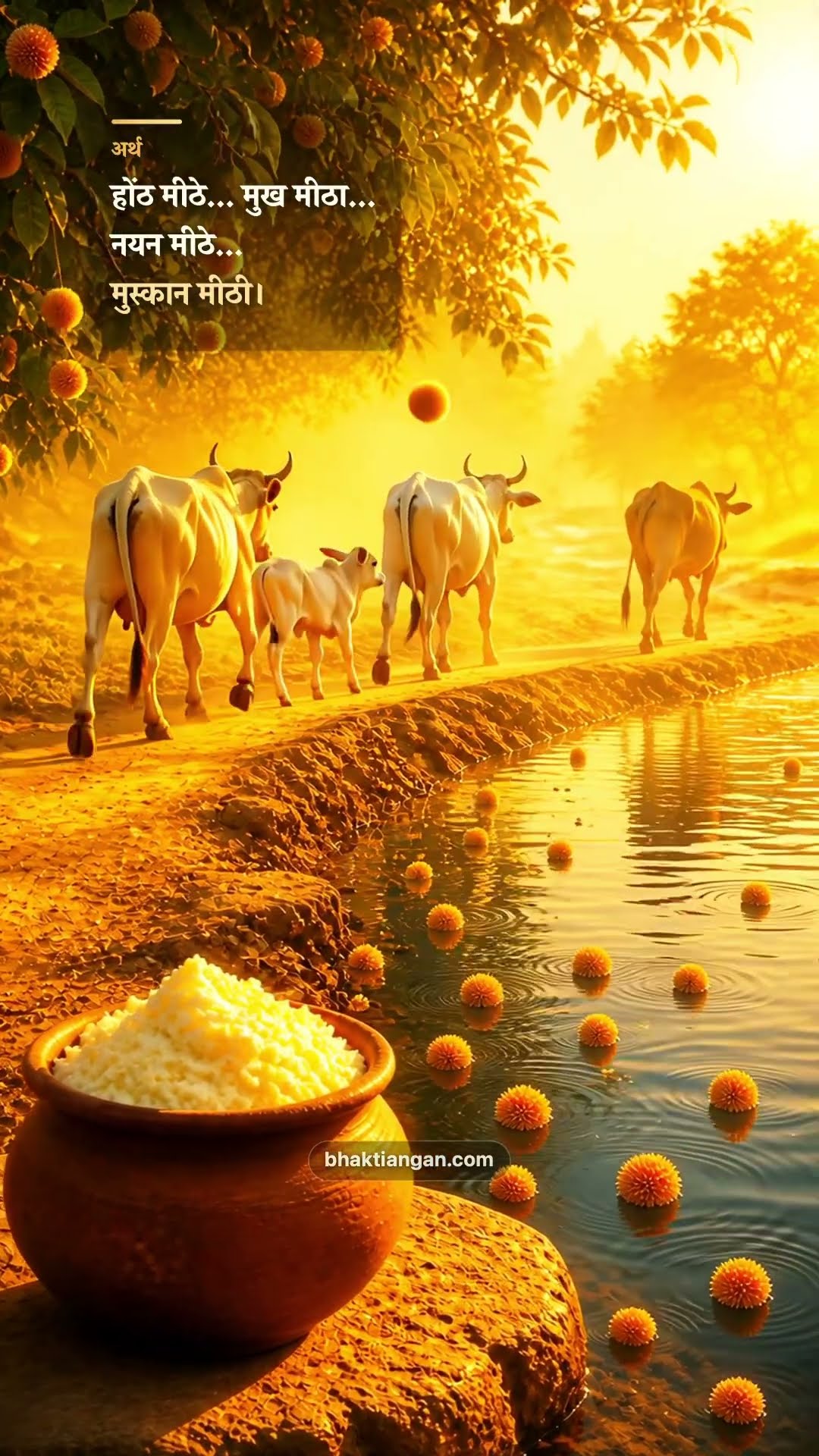
गोपा मधुरा गावो मधुरा यष्टिर्मधुरा सृष्टिर्मधुरा।
दलितं मधुरं फलितं मधुरं मधुराधिपतेरखिलं मधुरम्॥
Gopa madhura gavo madhura yashtir madhura srishtir madhura,
dalitam madhuram phalitam madhuram madhuradhipater akhilam madhuram.
The cowherd boys are sweet, the cows are sweet, his staff is sweet, his creation is sweet, what he breaks is sweet, what he brings to fruit is sweet: everything about the Lord of sweetness is sweet.
Eight verses, each ending with the same line: everything about the Lord of sweetness is sweet.
Frequently asked questions
What is the difference between a mantra and a shloka?
A mantra is a sacred formula repeated in japa, often from the Vedas. A shloka is a verse, usually from the epics, the Puranas or later devotional poetry, recited as a prayer. In everyday speech the two words overlap.
Which shloka should a child learn first?
Most families begin with Vakratunda Mahakaya and Gurur Brahma: short, easy to say and used every day.
Should they be said in Sanskrit?
Saying them in Sanskrit keeps the sound the tradition has carried for centuries. Knowing the meaning, given here, lets you say them with feeling.
Keep the count in the app. The Bhakti Angan japa counter keeps your mala count with a tap for each repetition, alongside the daily Panchang and darshan.
Get the appVideos open in a privacy-friendly YouTube player only when you press play. Nothing loads or plays on its own.