
Gayatri Mantra with Meaningगायत्री मंत्र
The verse of the Rigveda that asks for one thing: a mind turned toward the light.
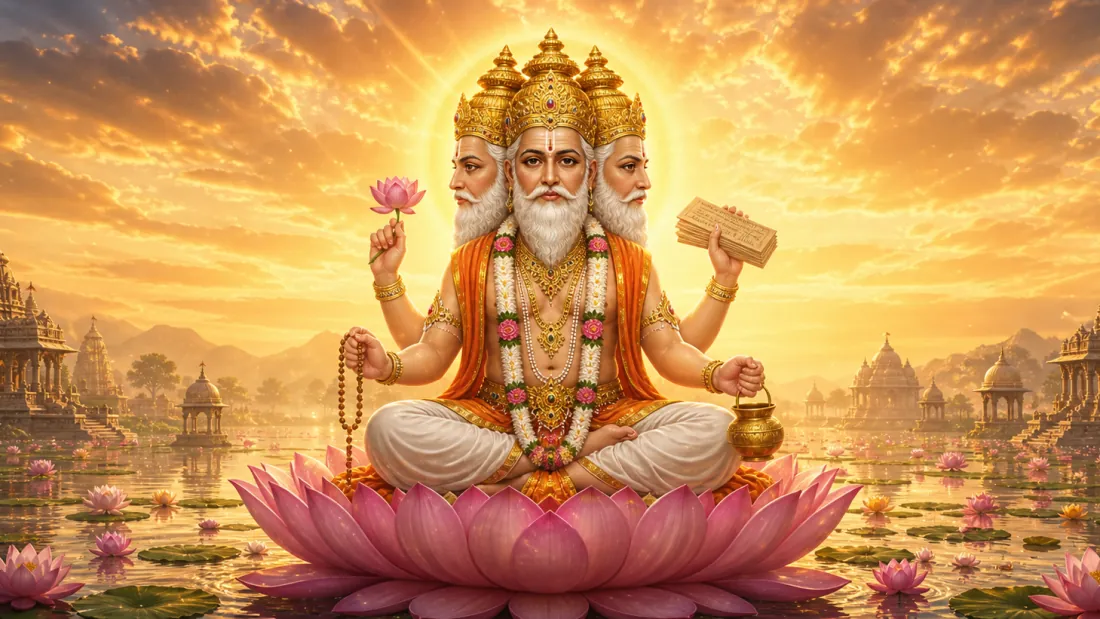
The Gayatri Mantra is a verse of the Rigveda (3.62.10), seen by the rishi Vishvamitra and addressed to Savitr, the divine sun who stirs all life into motion.
It takes its name from its metre, the gayatri: three lines of eight syllables. In recitation the verse is preceded by Om and the three vyahritis, bhur bhuvah svah, which name the earth, the space between and the heavens.
For centuries it was the first mantra a student received at the upanayana, the sacred thread ceremony, and it has been chanted at sunrise and sunset ever since. Today it is chanted in homes, schools and temples everywhere, and revered as Gayatri Mata, the mother of the Vedas.
ॐ भूर्भुवः स्वः।
तत्सवितुर्वरेण्यं भर्गो देवस्य धीमहि।
धियो यो नः प्रचोदयात्॥
Om bhur bhuvah svah,
tat savitur varenyam bhargo devasya dhimahi,
dhiyo yo nah prachodayat.
Om. Earth, the space between, and the heavens. We meditate on the most excellent radiance of the divine Savitr; may he inspire our minds.
The mantra does not ask for wealth or victory. It asks for a clear mind, and trusts that the rest follows from it.

Word by word
| Word | Transliteration | Meaning |
|---|---|---|
| ॐ | Om | the sacred syllable, the sound of the Absolute |
| भूः | bhuh | the earth |
| भुवः | bhuvah | the space between earth and sky |
| स्वः | svah | the heavens |
| तत् | tat | that |
| सवितुः | savituh | of Savitr, the divine sun who stirs all life |
| वरेण्यम् | varenyam | most excellent, worthy to be chosen |
| भर्गः | bhargah | the radiance that burns away impurity |
| देवस्य | devasya | of the divine one |
| धीमहि | dhimahi | we meditate on |
| धियः | dhiyah | thoughts, the intellect |
| यः | yah | who |
| नः | nah | our |
| प्रचोदयात् | prachodayat | may he inspire, may he set in motion |
How and when to chant
Sit facing east in the morning or north in the evening, after a bath if you can, with the spine straight. The traditional hours are the three sandhyas: sunrise, noon and sunset. Chant slowly enough that every word is clear, three, eleven or one hundred and eight times, turning one bead of the mala for each repetition. Keep the meaning in mind as you chant: the mantra asks for a clear mind, so let the mind be clear while saying it.
Sunrise and sunset for your city are on Aaj Ka Panchang.
Frequently asked questions
Who composed the Gayatri Mantra?
The rishi Vishvamitra. It is verse 3.62.10 of the Rigveda, addressed to Savitr, the divine sun.
Why is it called Gayatri?
After its metre, the gayatri: three lines of eight syllables. The mantra is also worshipped as Gayatri Mata, the mother of the Vedas.
What does Om bhur bhuvah svah mean?
Om is the sound of the Absolute; bhur, bhuvah and svah name the earth, the space between and the heavens. They are spoken before the verse, so the prayer reaches every world.
When should the Gayatri Mantra be chanted?
The sandhyas, sunrise, noon and sunset, are the traditional hours, and before study. Any time the mind is calm is right.
How many times should it be chanted?
Three, eleven or one hundred and eight times, the last being a full mala. A few repetitions said with attention are better than many said in a rush.
Keep the count in the app. The Bhakti Angan japa counter keeps your mala count with a tap for each repetition, alongside the daily Panchang and darshan.
Get the appVideos open in a privacy-friendly YouTube player only when you press play. Nothing loads or plays on its own.