The 12 Jyotirlingasद्वादश ज्योतिर्लिंग
The 12 shrines where Shiva is worshipped as a pillar of light, from Somnath on the western sea to Kedarnath in the Himalaya. Where each one stands, the story behind it, the stotram that names them all, and a film in Hindi that visits every one.
 6:48
What is a Jyotirlinga?
Jyotirlinga means a linga of light. The Shiva Purana tells how Brahma and Vishnu argued over which of them was greater, and Shiva appeared between them as an endless pillar of fire whose top and base neither could find. The Jyotirlingas are the shrines where Shiva is worshipped as that boundless radiance.
The 12 are listed together in a short stotram from the Kotirudra Samhita of the Shiva Purana, recited by devotees morning and evening. Its order is the order of this page.
The Dwadasha Jyotirlinga Stotram
सौराष्ट्रे सोमनाथं च श्रीशैले मल्लिकार्जुनम्।
उज्जयिन्यां महाकालमोङ्कारममलेश्वरम्॥
परल्यां वैद्यनाथं च डाकिन्यां भीमशङ्करम्।
सेतुबन्धे तु रामेशं नागेशं दारुकावने॥
वाराणस्यां तु विश्वेशं त्र्यम्बकं गौतमीतटे।
हिमालये तु केदारं घुश्मेशं च शिवालये॥
एतानि ज्योतिर्लिङ्गानि सायं प्रातः पठेन्नरः।
सप्तजन्मकृतं पापं स्मरणेन विनश्यति॥
What it says:
- Somnath in Saurashtra and Mallikarjuna on the Shrishaila mountain; Mahakal in Ujjain and Omkara at Amaleshwar.
- Vaidyanath at Parli and Bhimashankar in the Dakini forest; Rameshwar where the bridge was built, and Nageshwar in the Daruka forest.
- Vishweshwar in Varanasi and Tryambak on the bank of the Gautami; Kedar in the Himalaya and Ghushmesh at Shivalaya.
- Whoever recites these Jyotirlingas at evening and at dawn is freed, by their remembrance alone, of the wrongs of seven lifetimes.
The 12 at a glance
| # | Jyotirlinga | Where | State |
|---|---|---|---|
| 1 | Somnath | Prabhas Patan, near Veraval | Gujarat |
| 2 | Mallikarjuna | Srisailam, on the Nallamala hills above the Krishna | Andhra Pradesh |
| 3 | Mahakaleshwar | Ujjain, near the Shipra | Madhya Pradesh |
| 4 | Omkareshwar | Mandhata island in the Narmada, Khandwa district | Madhya Pradesh |
| 5 | Vaidyanath * | Baba Baidyanath Dham, Deoghar | Jharkhand |
| 6 | Bhimashankar * | Sahyadri hills, Pune district, at the source of the Bhima | Maharashtra |
| 7 | Rameshwaram | Ramanathaswamy temple, Rameswaram island | Tamil Nadu |
| 8 | Nageshwar * | Between Dwarka and Beyt Dwarka, Devbhumi Dwarka district | Gujarat |
| 9 | Kashi Vishwanath | Varanasi, on the western bank of the Ganga | Uttar Pradesh |
| 10 | Trimbakeshwar | Trimbak, Nashik district, below the Brahmagiri hills | Maharashtra |
| 11 | Kedarnath | Rudraprayag district, near the head of the Mandakini | Uttarakhand |
| 12 | Grishneshwar | Verul, near the Ellora caves, Chhatrapati Sambhajinagar district | Maharashtra |
* Other sites are also revered as this Jyotirlinga; see its section below.
1. Somnathसोमनाथ
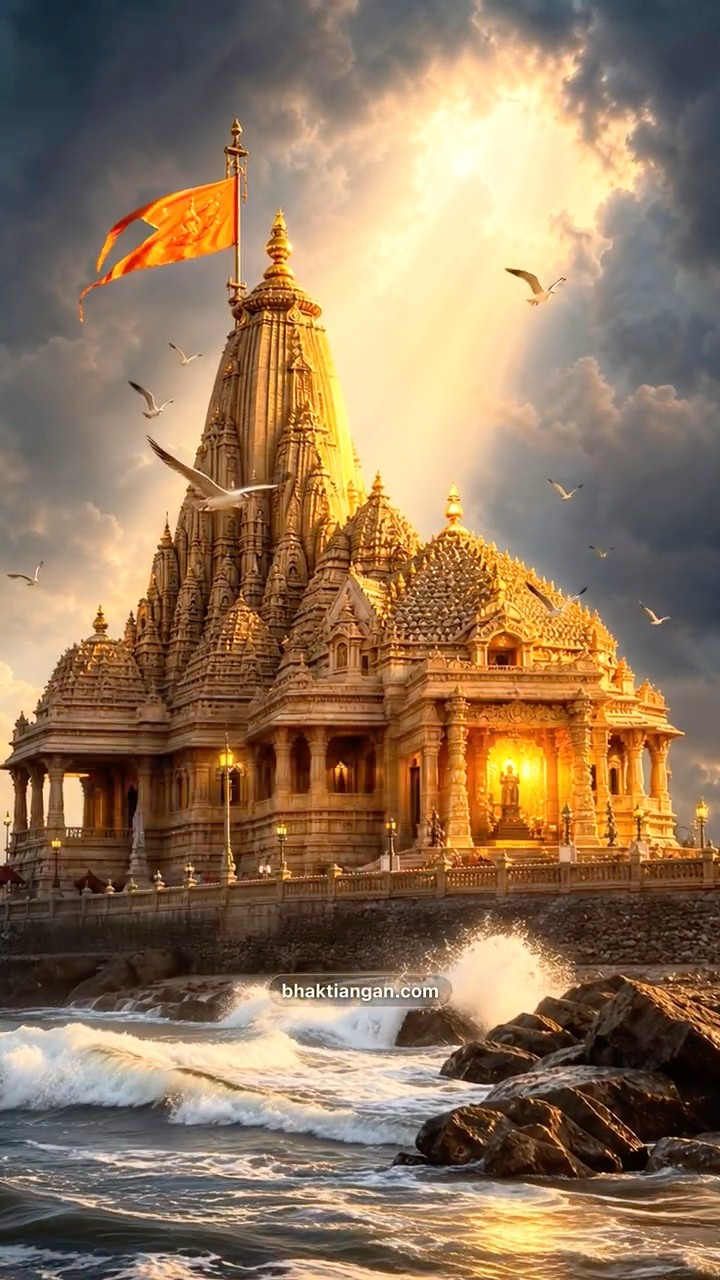
AtPrabhas Patan, near Veraval, Gujarat · सौराष्ट्रे सोमनाथं
Chandra, the Moon, was married to twenty seven daughters of Daksha but gave all his love to Rohini. When he ignored his father in law’s warning, Daksha cursed him with a wasting illness, and the Moon began to fade from the sky. On Brahma’s advice Chandra went to Prabhas on the western sea and worshipped Shiva for six months with the Mrityunjaya mantra. Shiva eased the curse: the Moon would wane for one fortnight and grow again in the next. At the request of the gods and sages, Shiva remained at Prabhas as Someshwara, the Lord of Soma, and the shrine has been Somnath ever since.
Somnath is the first name in the stotram and the first stop of many Jyotirlinga pilgrimages. The temple on the shore has been destroyed and raised again many times through history. The present temple, rebuilt on the initiative of Sardar Vallabhbhai Patel, opened on 11 May 1951, when President Rajendra Prasad installed the Jyotirlinga.
2. Mallikarjunaमल्लिकार्जुन
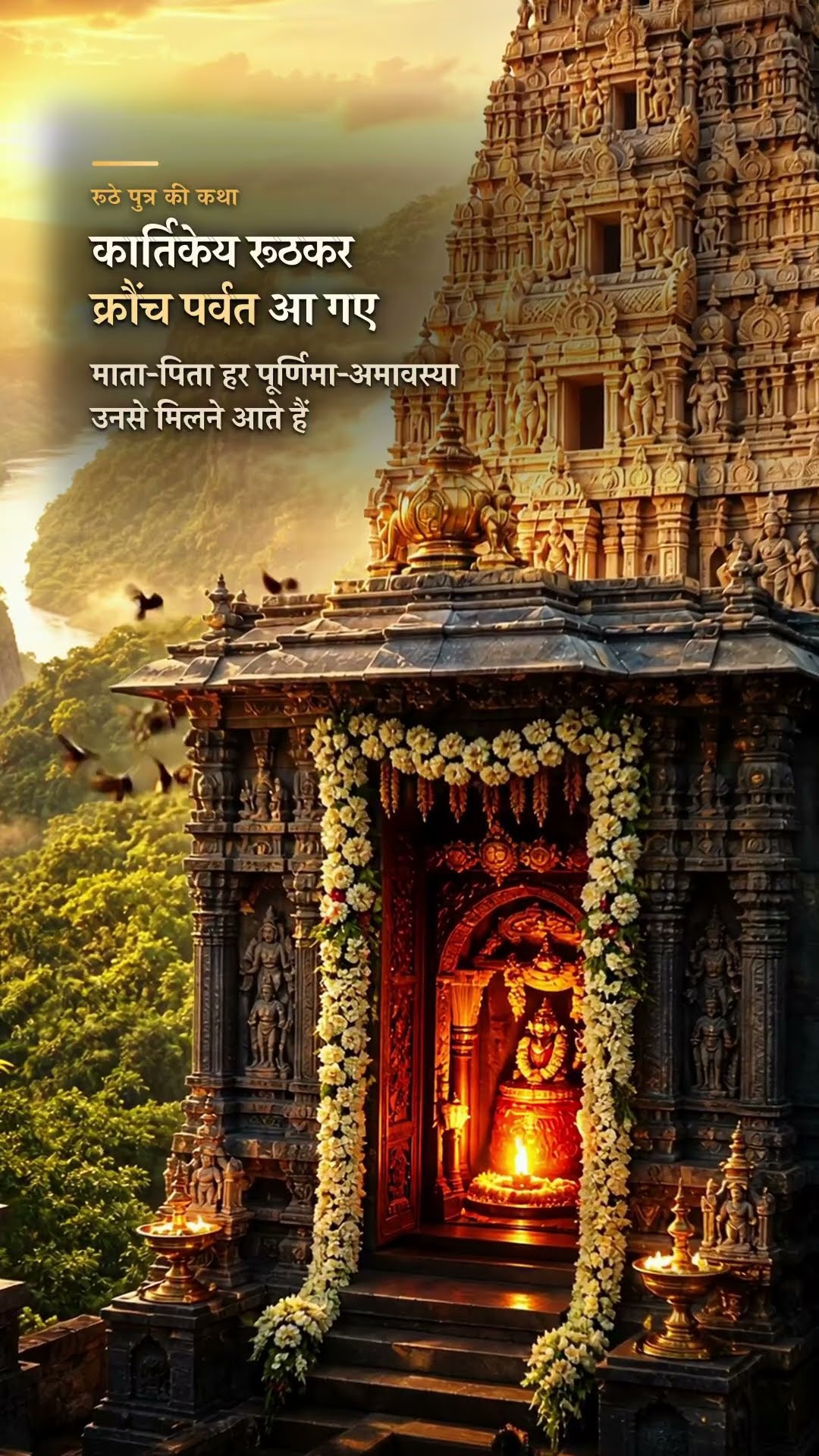
AtSrisailam, on the Nallamala hills above the Krishna, Andhra Pradesh · श्रीशैले मल्लिकार्जुनम्
When Shiva and Parvati decided which of their sons should marry first, Ganesha won by circling his parents, and Kartikeya, hurt, left Kailash for the Krauncha mountain in the south. Shiva and Parvati followed him, unable to bear the distance from their son. Kartikeya would not return, so Shiva settled on the mountain as a Jyotirlinga to stay near him. The name holds both parents: Mallika for Parvati and Arjuna for Shiva.
In the same complex the goddess is worshipped as Bhramaramba, a Shakti Peetha, so Srisailam is one of the rare shrines honoured both as a Jyotirlinga and as a seat of the Goddess. The Krishna flows far below the temple through the forested gorge.
3. Mahakaleshwarमहाकालेश्वर
AtUjjain, near the Shipra, Madhya Pradesh · उज्जयिन्यां महाकालम्
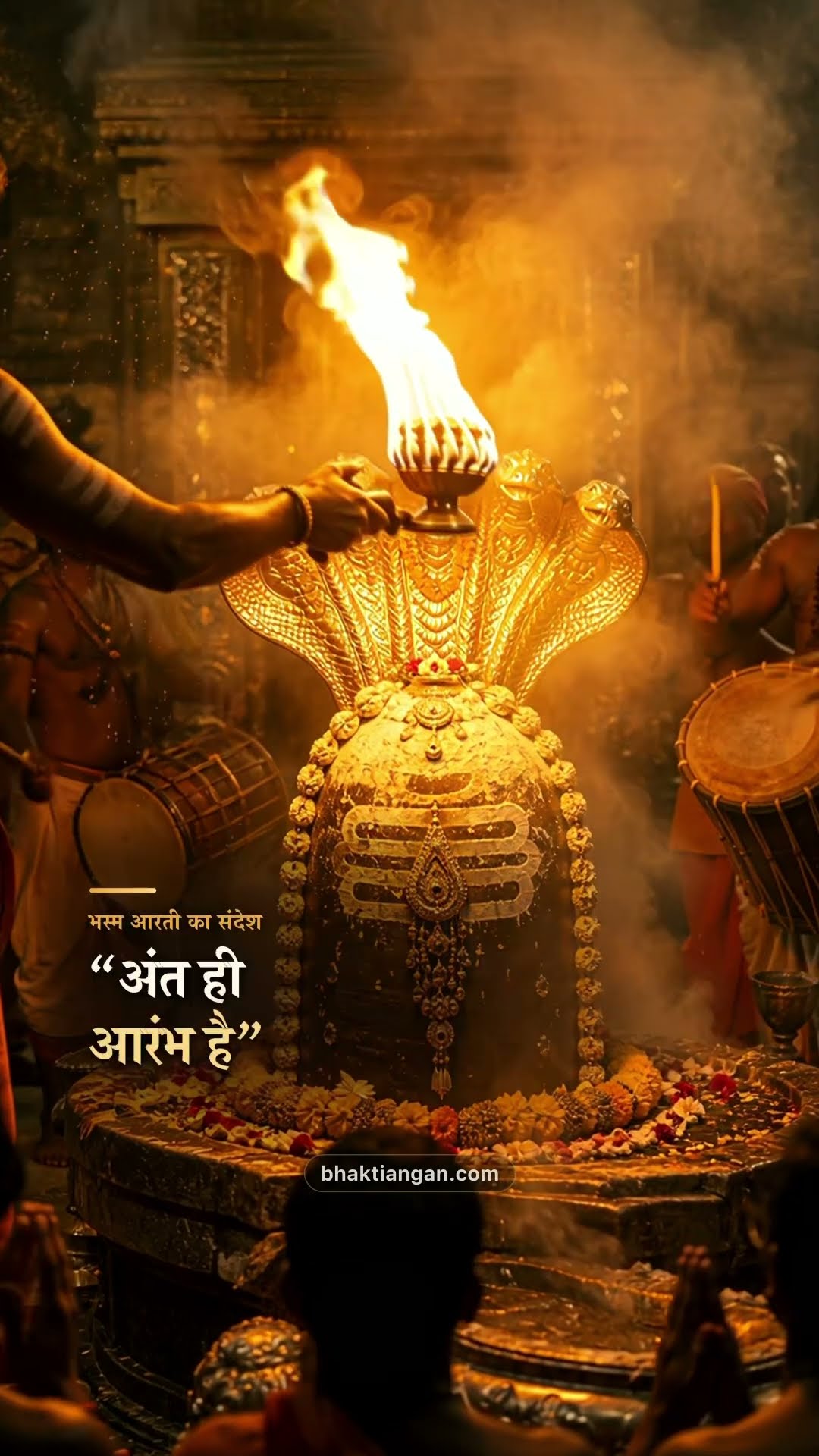
In Avanti lived a Brahmin, Vedapriya, who worshipped Shiva every day with a linga of clay, together with his four sons. The demon Dushana, made powerful by a boon from Brahma, came with his army to stamp out worship and ordered the family to stop. They refused and went on with their puja. As the demons rushed at them, the earth beside the linga split open with a roar, and Shiva rose from it in his fierce form as Mahakal and burned Dushana and his army to ash. The devotees asked him to stay and protect the city, and he remains in Ujjain as Mahakaleshwar.
Mahakaleshwar is the only one of the twelve whose linga faces south, the direction of death, which is why he is worshipped as the master of time and death. The linga is held to be self manifested. Its Bhasma Aarti before dawn, offered with sacred ash, needs advance booking.
4. Omkareshwarओंकारेश्वर
AtMandhata island in the Narmada, Khandwa district, Madhya Pradesh · ओङ्कारममलेश्वरम्
The sage Narada once told the Vindhya mountain that Meru stood higher than him and was honoured like a god. Wounded in pride, Vindhya shaped a linga of clay on the Narmada and worshipped Shiva without a break for six months. Pleased, Shiva appeared and granted his wish, and at the request of the gods and sages stayed there for the good of all. The one linga became two: Omkareshwar on the island and Amaleshwar, also called Mamleshwar, beside it. A second tradition says King Mandhata did his penance here, which is how the island got its name.
The island in the Narmada is said to be shaped like the syllable ॐ, which gives the shrine its name. The stotram names the pair together, Omkara at Amaleshwar, and pilgrims visit both the island temple and Mamleshwar on the south bank, since darshan of one is held incomplete without the other.

5. Vaidyanathवैद्यनाथ
AtBaba Baidyanath Dham, Deoghar, Jharkhand · परल्यां वैद्यनाथं
Ravana worshipped Shiva with such fierce devotion that Shiva gave him a linga to carry to Lanka, on one condition: wherever it touched the ground, there it would stay. On the way Ravana had to stop and handed the linga to a young cowherd, who set it down. When Ravana returned, he could not lift it again, and the linga stayed where it lay. Shiva is worshipped there as Vaidyanath, the Lord of healers.
In Sawan, the Shravani Mela brings kanwariyas who carry Ganga water on foot from Sultanganj to Deoghar, a walk of roughly 105 kilometres, to offer it on the linga.
Most lists today place Vaidyanath at Deoghar in Jharkhand. The stotram itself, though, says Parli, and Parli Vaijnath in Beed district, Maharashtra, is revered as the Jyotirlinga by many devotees; its temple was renovated by Ahilyabai Holkar in the 18th century. Baijnath in Kangra, Himachal Pradesh, is also named in some traditions.

6. Bhimashankarभीमशंकर
AtSahyadri hills, Pune district, at the source of the Bhima, Maharashtra · डाकिन्यां भीमशङ्करम्
Bhima, a son of Kumbhakarna, grew up in the Sahya mountains and swore revenge when he learned that Rama had destroyed his father’s line. Strengthened by a boon from Brahma, he overran the gods and threw King Sudakshina of Kamarupa, a devoted worshipper of Shiva, into prison. Sudakshina went on worshipping a linga of clay in his cell. When Bhima raised his sword to stop him, Shiva appeared, broke the demon’s weapons and reduced him and his army to ash. The gods asked Shiva to remain, and he stayed as Bhimashankar.
The temple stands in the forests of the Western Ghats where the Bhima river rises, in the area the stotram calls the Dakini forest.
The temple near Pune is the Bhimashankar of most lists. Because the legend’s king came from Kamarupa, a site at Pamohi near Guwahati in Assam is also put forward as the sixth Jyotirlinga, a claim the Assam government made in 2023 and that is disputed in Maharashtra and by pilgrimage priests.

7. Rameshwaramरामेश्वरम
AtRamanathaswamy temple, Rameswaram island, Tamil Nadu · सेतुबन्धे तु रामेशं
Rama wished to worship Shiva on the seashore and sent Hanuman to Kailash to bring a linga. Hanuman was delayed, and as the auspicious hour neared, Sita shaped a linga out of sand, and Rama worshipped Shiva in it. That linga is the Ramalingam. When Hanuman arrived with the linga from Kailash, Rama honoured his devotion by asking that it be worshipped first, and it is still known as the Vishwalingam. The stotram names the place Setubandha, where the bridge to Lanka was built.
Pilgrims bathe in the temple’s twenty two theerthams, its sacred wells, before darshan. The outer corridor is reputed to be the longest of any temple, and Rameshwaram is also one of the four Char Dham, with Badrinath, Puri and Dwarka.

8. Nageshwarनागेश्वर
AtBetween Dwarka and Beyt Dwarka, Devbhumi Dwarka district, Gujarat · नागेशं दारुकावने
In the Daruka forest ruled the demon Daruka and his wife, who seized travellers and threw them into prison. Among the captives was a devotee named Supriya, who kept chanting Shiva’s name in the dark and taught the others to do the same. When the demons came to kill him, Shiva appeared, destroyed them, and freed the prisoners. He stayed in the forest as Nageshwar, the Lord of serpents.
The Dwarka shrine stands on the coast on the way to Beyt Dwarka, close to Krishna’s city, and is the Nageshwar most pilgrims visit.
The stotram gives only the forest’s name, so three places are revered as Nageshwar: the shrine near Dwarka in Gujarat, the most common identification; Aundha Nagnath in Hingoli district, Maharashtra; and Jageshwar in Almora district, Uttarakhand, in a forest of deodar.
9. Kashi Vishwanathकाशी विश्वनाथ
AtVaranasi, on the western bank of the Ganga, Uttar Pradesh · वाराणस्यां तु विश्वेशं
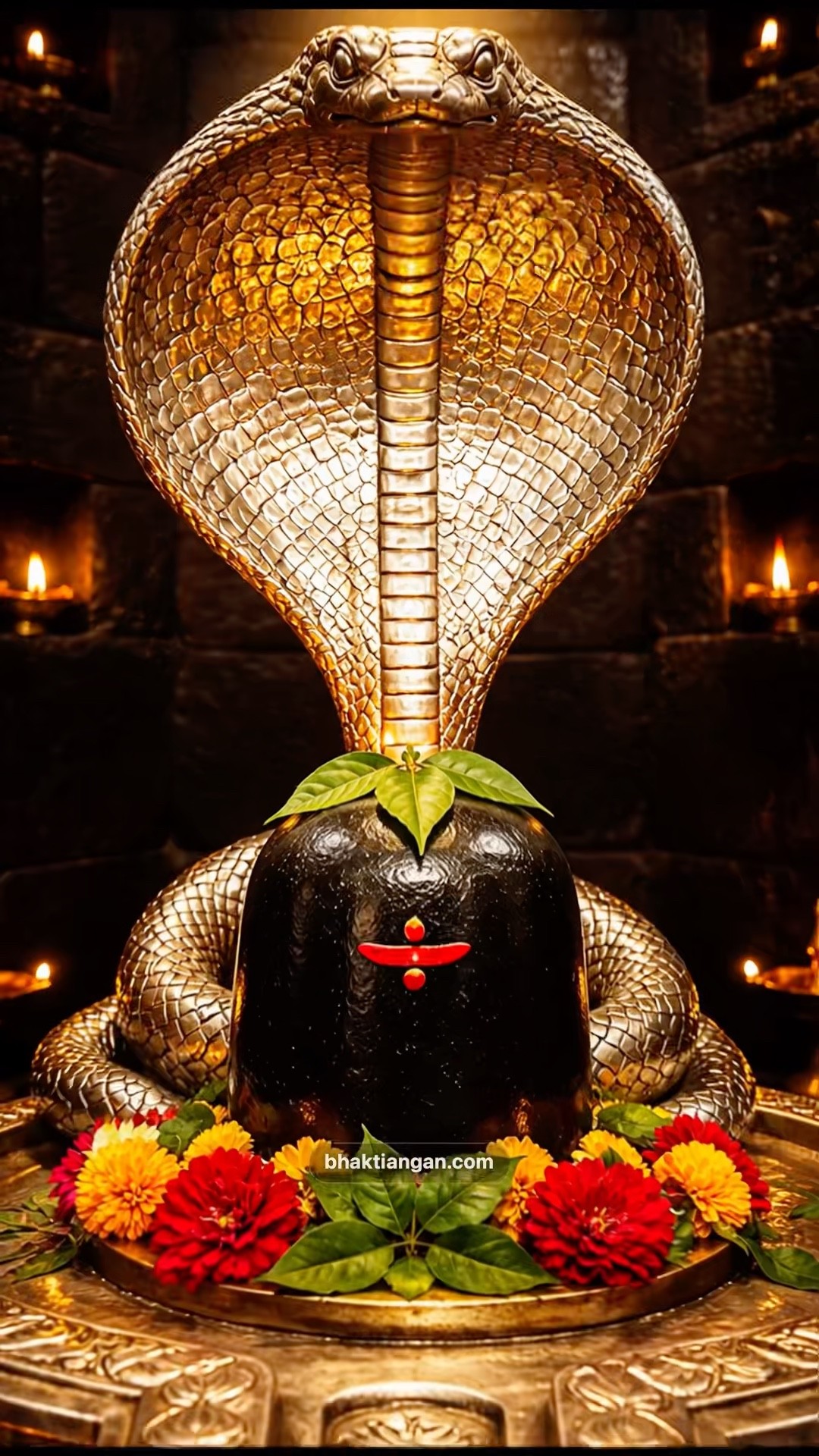
Kashi is said to be Shiva’s own city, resting on the point of his trident, so that it does not perish even when the worlds dissolve. Here Shiva is Vishwanath, the Lord of the universe, and the tradition holds that whoever dies in Kashi receives liberation, with Shiva himself giving the final mantra. Pilgrims have come for centuries to bathe in the Ganga and offer its water on the linga.
The present temple was built by Ahilyabai Holkar around 1780, and Maharaja Ranjit Singh later gave the gold that covers its spires. The Shri Kashi Vishwanath Dham corridor, whose first phase opened on 13 December 2021, once again links the shrine to the river ghats.

10. Trimbakeshwarत्र्यंबकेश्वर
AtTrimbak, Nashik district, below the Brahmagiri hills, Maharashtra · त्र्यम्बकं गौतमीतटे
The sage Gautama lived on the Brahmagiri hills and did severe penance to Shiva. Pleased, Shiva released the Ganga there, and she came down as the Godavari, also called the Gautami after the sage. At the request of Gautama and the gods, Shiva stayed at the river’s source as Tryambakeshwar, the three eyed Lord. That is why the stotram places him on the bank of the Gautami.
The linga here is unusual: it sits in a hollow, and within it are three small lingas for Brahma, Vishnu and Shiva. The present temple was built in the 18th century by Peshwa Balaji Bajirao, known as Nanasaheb.

11. Kedarnathकेदारनाथ
AtRudraprayag district, near the head of the Mandakini, Uttarakhand · हिमालये तु केदारं
After the war at Kurukshetra, the Pandavas went into the Himalaya to seek Shiva’s forgiveness, but Shiva did not wish to be found and hid among cattle in the form of a bull. Bhima recognised him, and as the bull sank into the earth he caught hold of it, and the hump remained above the ground at Kedarnath. The other parts of the bull are worshipped at the four sister shrines of the Panch Kedar: Tungnath, Rudranath, Madhyamaheshwar and Kalpeshwar.
At about 3,583 metres, Kedarnath is the highest of the twelve and is reached only on foot, by pony or by helicopter. Snow closes it in winter, and it opens roughly from Akshaya Tritiya to Bhai Dooj, on dates the temple committee announces each year. Tradition credits Adi Shankaracharya with restoring the temple; a shrine behind it marks his samadhi.

12. Grishneshwarघृष्णेश्वर
AtVerul, near the Ellora caves, Chhatrapati Sambhajinagar district, Maharashtra · घुश्मेशं च शिवालये
Sudeha and her husband Sudharma had no children, so Sudeha had her sister Ghushma marry him. Ghushma made clay lingas every day, worshipped them and immersed them in a lake, and a son was born to her. Consumed by jealousy, Sudeha killed the boy and threw his body into the lake. Ghushma did not stop her worship. Moved by her faith, Shiva brought her son back to life, and at Ghushma’s request remained there as Ghushmeshwar.
Grishneshwar is the last of the twelve in the stotram, a short walk from the Ellora caves. It was rebuilt in the 16th century by Maloji Bhosale, the grandfather of Chhatrapati Shivaji, and the present temple was built by Ahilyabai Holkar in the 18th century.

Frequently asked questions
What is a Jyotirlinga?
Jyotirlinga means a linga of light. The Shiva Purana tells how Brahma and Vishnu argued over which of them was greater, and Shiva appeared between them as an endless pillar of fire whose top and base neither could find. The Jyotirlingas are the shrines where Shiva is worshipped as that boundless radiance.
Which is the first Jyotirlinga?
Somnath in Gujarat, the first name in the Dwadasha Jyotirlinga Stotram. The stotram ends with Grishneshwar.
Which Jyotirlinga faces south?
Mahakaleshwar in Ujjain, the only one of the 12 whose linga faces south.
How many Jyotirlingas are in Maharashtra?
3 by the most common list: Bhimashankar, Trimbakeshwar and Grishneshwar. Many devotees also revere Parli Vaijnath and Aundha Nagnath in Maharashtra as the Vaidyanath and Nageshwar Jyotirlingas.
When is Kedarnath open?
Kedarnath is closed by snow in winter and opens roughly from Akshaya Tritiya to Bhai Dooj; the temple committee announces the exact dates each year.
Why do some Jyotirlingas have more than one site?
For some shrines the stotram names a region or a forest rather than a town, and over the centuries more than one temple came to be revered as that Jyotirlinga. This page gives the site most lists use and names the others, for Vaidyanath, Bhimashankar and Nageshwar.
Are the film and the Shorts in Hindi?
Yes. The film and every Short on this page are narrated in Hindi.
Maha Shivratri, Sawan Somwar and every Pradosh, on time for your city. The Bhakti Angan app brings the daily Panchang, festival and vrat reminders, darshan and a japa counter.
Download free on the App StoreThe film and the Shorts open in a privacy-friendly YouTube player only when you press play. Nothing loads or plays on its own.